Love Reading?
Articles
Find our blog posts and media articles all in one place!
Reduced Turnout: How to Keep Horses Settled, Engaged and Content Through Winter
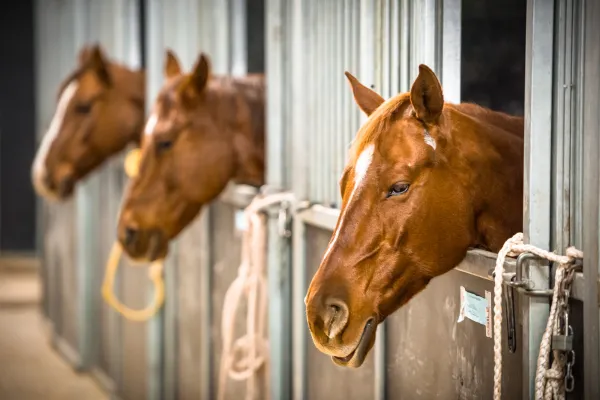
Reduced Turnout: How to Keep Horses Settled, Engaged and Content Through Winter
There’s a particular point in the year when the mood on livery yards quietly shifts.
The mornings are dark. 🌒
The evenings are darker. 🌙
The rain feels relentless. 🌧️
And the fields… well, they slowly turn into a muddy obstacle course — especially around that gate. 😅
For many caregivers and horses, reduced turnout is one of the most frustrating parts of autumn and winter. Horses who are used to moving, grazing and socialising suddenly have fewer opportunities to do the things that help them feel regulated and relaxed. Caregivers, meanwhile, are juggling time, weather, work and the guilt of knowing their horse isn’t living their “best life” right now.
Why Reduced Turnout Is Hard on Horses 🧠💔
Horses are designed to:
Move little and often 🚶♀️
Graze for many hours a day 🌱
Socialise with chosen companions 🐎🐎
When turnout is reduced, these needs don’t disappear – they just go unmet unless we step in. This is often when caregivers notice:
Increased anxiety 😬
Over-arousal 🔥
Repetitive behaviours, such as weaving or cribbing 🔁
“Training issues” that are actually management issues in disguise 👀
If this sounds familiar, take a breath — this season doesn’t have to be all stress and survival mode.
👉 With the right enrichment toolkit, reduced turnout can be navigated in a way that supports both behaviour and wellbeing.
Enrichment: Not a Luxury, but a Lifeline
When movement and grazing time are restricted, enrichment becomes more than “something nice to do”. It becomes a way of meeting key behavioural needs — exploration, choice, problem-solving and social connection.
Here are five of my favourite, realistic enrichment ideas for this time of year.
1️⃣ Multiple Forages to Encourage Patch Foraging (Even in the Stable!)
Horses are natural browsers. In the wild, they don’t eat one thing in one place — they move between patches, sampling as they go.
You can recreate this even when turnout is limited by offering:
Different types of hay or haylage
Small amounts of chopped fibre
Hay placed in multiple locations or nets
This encourages movement, decision-making and more natural feeding behaviour — all of which help take the edge off frustration. 🥰
2️⃣ Trick Training in the Stable 🎯🍎
Short, low-pressure trick training sessions can be a game-changer during winter.
Simple behaviours like:
Targeting
Head lowering
Nose touches
Standing on a mat
provide mental stimulation and a positive way to interact with humans — without needing perfect weather or an arena.
Short, positive sessions = mental stimulation without physical overload 🧠✨
3️⃣ Buddy Visits: Social Time Still Matters 🤍🐴
If turnout with friends is limited, look for ways to maintain social connection.
This might mean:
Standing tied near a preferred companion
Hand-grazing alongside a friend
Allowing horses to spend time together over stable doors
Social buffering is powerful. Time with a preferred partner can significantly reduce stress and increase relaxation.
4️⃣ In-Hand Foraging Walks 🌿🚶♀️
You don’t need acres of perfect grazing to offer foraging opportunities.
Short, calm in-hand walks where horses are allowed to sniff, explore and graze appropriate patches can meet both movement and curiosity needs. These walks aren’t about fitness or obedience — they’re about being a horse in a restricted season.
5️⃣ Herbal Pastes on Toys 🌸🧴
Herbal pastes or purées smeared onto:
Lick mats
Stable toys
Horse-safe novel items
encourage licking, exploration and prolonged engagement. Licking itself can be soothing and different flavours offer novelty without over-arousal.
A Gentle Reminder
If your horse feels more unsettled, reactive or “difficult” at this time of year, it’s not a training failure — it’s often a management challenge.
When we meet horses where they are, adapt to the season and get creative, we can protect both behaviour and relationship through the toughest months.
And if you’d like a shed-load more ideas, practical strategies and science-backed guidance, our Chaos to Calm online course is designed specifically to help caregivers support emotional regulation, reduce stress and build calmer, happier horses — whatever the weather throws at you.
Winter might reduce turnout… but it doesn’t have to reduce wellbeing. 💛

Blog Posts Straight to Your Inbox!
What do clients say?

Amy D

We had an intro session on clicker training with Louise, it was fabulous, very informative. After reading up about clicker training and getting a bit confused with all the different approaches, Louise made it very clear and explained it all thoroughly.
Eiddwen S
I contacted Why Do Horses for help with issues I was having travelling my horse. During our sessions I found myself wanting to learn more about equine behaviour and body language and I have realised I was missing a lot of knowledge. Why Do Horses have changed my entire outlook on horse training and behaviour, this is something for which I will be forever grateful!